
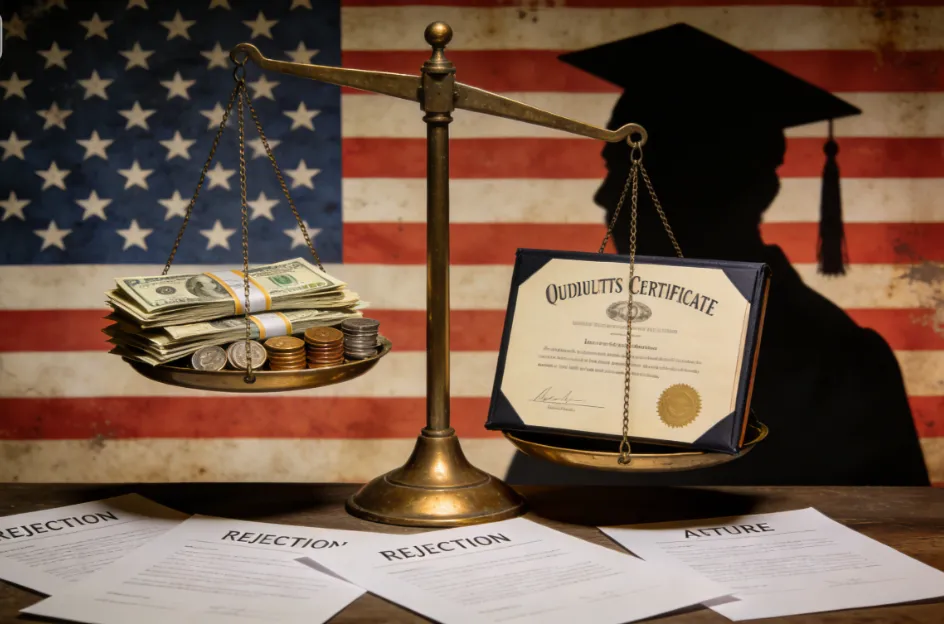
For many students and families, studying for a bachelor’s degree in the United States is seen as a major life milestone — and a major investment.
What most people underestimate, however, is how much that investment truly costs over four years, and how long it takes to pay off afterward.
In 2025, the cost of earning a US bachelor’s degree goes far beyond tuition. Once housing, healthcare, inflation, and student debt are factored in, the numbers can be surprising — even overwhelming.
This guide breaks down the real financial picture of a US undergraduate degree, so you can decide whether it’s truly worth it for your situation.
The 4-Year Price Tag Most Students Don’t Expect
A typical US undergraduate student will spend between $180,000 and $320,000 over four years, depending on the type of university, location, and lifestyle choices.
This figure includes:
- Tuition and mandatory fees
- Housing and utilities
- Food and transportation
- Health insurance
- Books, technology, and hidden costs
The biggest mistake students make is budgeting for one year, instead of understanding the four-year financial commitment.
Tuition: The Cost Everyone Knows — But Still Underestimates
Public vs Private Universities
In 2025, average annual tuition looks like this:
- Public university (in-state): $11,000 – $13,000
- Public university (out-of-state): $28,000 – $32,000
- Private university: $40,000 – $55,000
Over four years, tuition alone can range from $44,000 to over $220,000.
Tuition Inflation Is Real
Most universities increase tuition by 3–6% annually.
A degree that seems “affordable” in year one may cost 20–25% more by year four.
Many students borrow early without realizing how much future tuition increases will add to their total debt.
Living Expenses: Where the Real Money Goes
For many students, living costs exceed tuition, especially in major US cities.
Housing: Dorm vs Off-Campus Rent
- On-campus dorms: $10,000 – $15,000 per year
- Off-campus rent: $800 – $1,500 per month (location dependent)
In cities like New York, Boston, or San Francisco, rent alone can exceed $18,000 per year.
Dorms may look more expensive upfront, but off-campus housing often includes:
- Utility bills
- Internet
- Furniture
- Security deposits
These hidden costs add up quickly.
Food, Transportation, and Daily Expenses
Average annual costs:
- Food: $3,500 – $6,000
- Transportation: $1,200 – $2,500
- Personal expenses: $2,000 – $3,500
Students who underestimate daily spending often rely more heavily on credit cards or additional loans later.
Healthcare and Insurance: A Required Cost Many Ignore
Most US universities require health insurance.
- University plans: $2,000 – $3,500 per year
- Private plans: Vary widely by coverage
Medical costs are one of the most unpredictable expenses. A single emergency room visit can cost thousands without proper coverage.
Hidden Costs That Quietly Drain Your Budget
These are expenses students rarely plan for:
- Textbooks and digital access codes
- Course-specific lab or material fees
- Laptop replacements or repairs
- Internship relocation costs
- Administrative and graduation fees
Over four years, these “small” expenses often exceed $8,000 – $12,000.
Total Cost Breakdown: A 4-Year Perspective
| Scenario | Estimated 4-Year Cost |
|---|---|
| Public (In-State) + Dorm | $180,000 – $210,000 |
| Public (Out-of-State) + Rent | $220,000 – $260,000 |
| Private University | $260,000 – $320,000 |
This is the number that truly matters — not the annual tuition.
How Do Most Students Pay for a US Bachelor’s Degree?
Family Contributions
Some families cover tuition partially or fully, reducing long-term debt.
However, even families with support often underestimate living costs.
Student Loans: Federal vs Private
Student loans are how most undergraduates bridge the gap.
- Federal loans: Lower interest, income-based repayment
- Private loans: Higher interest, fewer protections
Interest begins accumulating quickly. By graduation, many students owe 20–30% more than they originally borrowed.
A student who borrows $80,000 may end up repaying over $110,000 over time.
Part-Time Jobs: Helpful, But Limited
Most undergraduates earn:
- $12–18 per hour
- 10–20 hours per week during semesters
Realistically, part-time income covers daily expenses, not tuition.
Relying on work to pay for rent often leads to academic stress or burnout.
Financial Mistakes That Cost Students Thousands
1. Borrowing Too Much, Too Early
Many students take out the maximum loan amount without understanding future interest.
2. Choosing Housing Without a Budget
Location convenience often outweighs long-term affordability — a costly mistake.
3. Ignoring Major-to-Income Reality
Not all degrees lead to salaries that can comfortably service student debt.
These mistakes don’t feel serious in year one — but they compound by graduation.
Is a US Bachelor’s Degree Worth It?
The answer depends heavily on major choice, total debt, and career outcomes.
Average Starting Salaries (Approximate)
- Engineering & Computer Science: $70,000 – $85,000
- Business & Economics: $55,000 – $65,000
- Social Sciences & Arts: $40,000 – $50,000
A general rule used by financial advisors:
Total student debt should not exceed your first year’s salary.
Many graduates exceed this threshold — and feel the pressure for years.
Who a US Bachelor’s Degree Makes Sense For
This path works best if:
- You limit loan dependence
- You choose a degree with strong employment outcomes
- You plan housing and expenses conservatively
It’s financially risky if:
- Loans cover more than 70% of total costs
- Expected income is uncertain
- Living expenses are underestimated
Final Verdict: Cost vs Value
A US bachelor’s degree can be worth it — but only with a realistic financial plan from day one.
The biggest risk isn’t tuition itself.
It’s committing to four years without fully understanding the long-term cost, debt, and financial trade-offs.
For students who plan carefully, control expenses, and choose sustainable paths, the investment can pay off.
For those who don’t, the financial burden often lasts far longer than the degree.