
Why do we need a ‘growth mindset’?
Have you ever given up on learning a new skill because you couldn’t learn it? Do you doubt your ability when you perform poorly at work? Or when encountering setbacks in life, the voice ‘I was not born for this’ often comes to mind?
These ideas are not unique to individuals, but are typical manifestations of what is known in psychology as’ fixed mindsets’. This kind of thinking can make people feel that abilities are innate and unchangeable, so when faced with challenges and failures, they are often prone to self doubt.
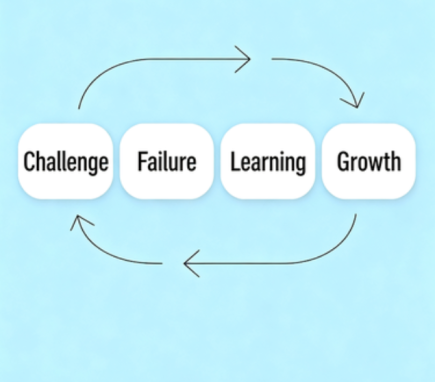
However, psychologists Carol Dweck In years of research, another mode of thinking has been proposed – Growth Mindset. This mentality emphasizes that abilities are not fixed, but can be gradually improved through effort, learning, practice, and environmental cultivation. When we face challenges with a growth mindset, we view setbacks as learning opportunities rather than proof of failure.
In this era full of changes and challenges, whether it is students, professionals, or those who want to improve themselves, learning to embrace growth thinking is undoubtedly a key that can help us unlock our potential.
What is growth mindset? Core concept and importance
Growth Mindset was first developed by Carol Dweck In her research (Dweck, 2016), the core viewpoint is:
- Ability is not fixed, but can be improved through continuous effort, learning, and practice.
- Failure is not a proof of insufficient ability, but an opportunity for us to see our shortcomings and make improvements.
- Challenge is not a risk, but a stage that can stimulate potential and allow people to grow.
On the contrary, ‘Fixed Mindset’ believes that intelligence, talent, and ability are predetermined, and failure represents’ unsuitability ‘or’ inability ‘, which often leads to avoidance of challenges, lack of confidence, and persistent anxiety.
Research shows that people with growth mindset perform better in academic, workplace, and mental health than those with fixed mindset (Yeager&Dweck, 2020).
👉 Example 1: Two students’ math exam
After failing the math exam, Mike told himself, ‘I’m just not good at math, there’s no hope.’ So he gradually became unwilling to work hard, and his grades continued to decline in the end.
Jerry also didn’t do well in the exam, but he thought to himself, ‘I didn’t understand it thoroughly this time, but I can practice again and ask my teacher or classmates for help.’ As a result, he improved more and more, and eventually excelled in math classes in higher grades.
These two different reactions are the difference between fixed thinking and growth thinking.
Why can growth mindset drive self growth?
Break the ‘self imposed limitations’
Fixed thinking can make people feel that their potential is limited, but growth thinking can help people constantly expand their boundaries. The self actualization prophecy in psychology (Merton, 1948) states that our beliefs influence our actions, which in turn affect our outcomes, which reinforce our beliefs and form a positive cycle.
👉Example 2: Language Learning
Many people often say when learning English, ‘I was born without language talent.’ This is a fixed mindset. On the contrary, if you can tell yourself, ‘My pronunciation is not good right now, but as long as I practice listening and speaking for 20 minutes every day, I will gradually improve.’ As you continue to take action, the results will accumulate and eventually your beliefs will be strengthened.
Enhance psychological resilience
Growth mindset can transform failure into learning nourishment. Research has found that people who can learn from mistakes not only perform better in the long run, but also remain calm in stressful environments.
👉 Example 3: Failure of Workplace Projects
Jessica was behind schedule while leading the team on a project due to inadequate planning. She didn’t just blame herself, but reviewed the process, sorted out the problems, and improved the process for the next project. As a result, her team not only improved efficiency, but also became more cohesive.
Inspire creativity and innovation
People with fixed thinking often fear trying because failure is seen as evidence that they are not good enough; People with a growth mindset are more willing to take risks because they know that trying is learning in itself. This mentality often leads to breakthrough innovation.
👉 Example 4: Entrepreneurial Story
Many stories of successful entrepreneurs reflect a growth mindset. Before founding Alibaba, Jack Ma failed several times in his entrepreneurship, but he did not give up because of this. Instead, he treated each failure as “tuition”. In the end, the experience he accumulated became the cornerstone of success.

How to cultivate growth mindset? 4 Psychological Strategies and Life Applications
Strategy 1: Identify and challenge the pitfalls of fixed thinking
We often hear restrictive voices in our hearts, such as’ I just can’t do it ‘and’ This is not my strong suit ‘. These ideas are typical manifestations of fixed thinking.
Application method:
- Change ‘I’m not good at this’ to’ I haven’t mastered it yet, but I can improve through learning ‘.
- When you fail, remind yourself, “This is just a process, it doesn’t mean I’m not good
👉 Life Case
Ash was afraid of going on stage due to his poor presentation skills, but during a training session, he began to transform ‘I don’t know how to speak’ into ‘I still need to practice my speaking skills’. After three months of continuous practice, he was not only able to speak freely, but also won an award in the company’s internal speech competition.
Strategy 2: Embrace failure as an opportunity for learning
Failure does not mean failure, but rather provides valuable information that tells us’ where we need to improve ‘.
Application method:
- After an error occurs, ask yourself, ‘What did I learn this time?’
- Treat mistakes as opportunities to adjust strategies, rather than reasons to deny oneself.
👉 Life Case
Lucy failed her first road test for her driver’s license. At first, she was very frustrated, but later decided to analyze her nervousness and lack of skills. Before the second exam, she focused on practicing turning and parking, and ultimately passed smoothly.
Strategy 3: Set challenging but feasible goals
Too easy goals cannot stimulate potential, while too difficult goals are prone to defeat. Growth mindset emphasizes’ just the right challenge ‘.
Application method:
- Break down big goals into small steps and gradually accumulate a sense of achievement.
- Give yourself positive feedback for every small step you take.
👉 Life Case
Nancy wants to run a marathon, but she has never run a long run before. If you directly set ‘run 42 kilometers at once’, it will inevitably fail. So he first set a daily run of 2 kilometers, gradually increasing it to 5 kilometers and 10 kilometers. Half a year later, he successfully completed a half marathon and eventually finished the entire race.
Strategy 4: Proactively seek and make good use of feedback from others
People with fixed thinking are afraid of criticism because it threatens their self-esteem; People with a growth mindset view feedback as a resource for improvement.
Application method:
- Proactively request specific advice from others.
- Treat feedback as an ‘improvement guide’ rather than a ‘negative evaluation’.
👉 Life Case
After the company report, Monica took the initiative to ask the supervisor, ‘Where do you think I could be clearer?’ The supervisor suggested that she present the data more structurally. She improved accordingly and received full recognition for her next report.
Daily exercises to maintain growth mindset
- Self reflection: Take 5 minutes every day to record the challenges you encountered today and what you have learned from them.
- Mindfulness practice: When the voice “I can’t do it” comes to mind, use deep breathing and self reminder to transform it into “I can still improve”.
- Environmental support: Get along with people who support you and encourage learning, and avoid being immersed in a negative atmosphere for a long time.
- Celebrating small achievements: Don’t overlook any progress, whether it’s learning a new word or solving a small problem.
Long term benefits of growth mindset
- Learning and workplace performance: easier to sustain progress and adapt to new challenges.
- Psychological health: reduce anxiety and self doubt, enhance confidence and resilience.
- Interpersonal relationships: Able to accept suggestions and different perspectives from others, and establish positive interactions.
- Creativity and Happiness: Continuously exploring and breaking through oneself, making life more fulfilling.
👉Example: Regulatory power during the epidemic
During the epidemic, many people had to work or study from home. People with fixed thinking may feel that ‘I cannot regulate this way’, leading to low efficiency; People with a growth mindset may think, ‘This is an opportunity to practice self-discipline and digital tools.’ As a result, the latter can adjust to changes faster and even improve their ability to work remotely.

Embrace growth mindset and achieve a better version of yourself
Growth mindset is not a sudden change in mindset, but a process that requires constant practice and reflection. When we begin to recognize the sound of fixed thinking, learn to absorb nutrients from failures, and have the courage to challenge ourselves and accept feedback, we have already embarked on the path of continuous growth.
The most important thing is that growth mindset reminds us: “Your potential is far greater than you imagine
Whether it’s learning, the workplace, or life, as long as we maintain a growth mindset, we can constantly break through limitations and achieve higher goals in our hearts.