
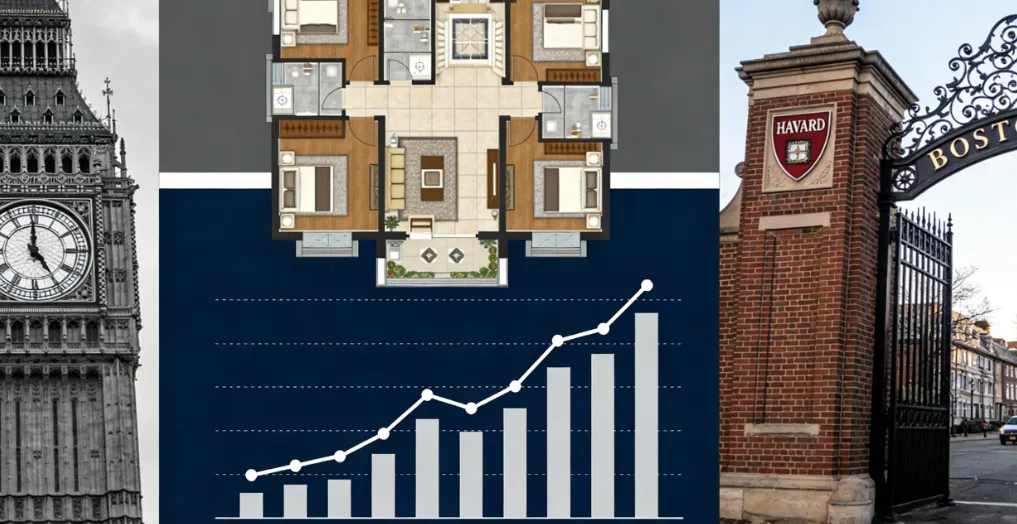
As an educator deeply embedded in the Western education system for decades, I’ve watched countless families grapple with the dual pressure of funding higher education and securing stable, safe housing for their students. Tuition fees, accommodation costs, and living expenses continue to climb year over year, leaving even middle-class households searching for sustainable financial solutions. For local families, international students, and long-term investors alike, “study by property” — the strategy of purchasing residential real estate near top universities to offset education costs via rental income and capital appreciation — has evolved from a niche hack to a mainstream, data-backed wealth-building tool.
In this comprehensive guide, we’re ditching generic investment advice and leaning into local expertise: the unwritten rules, neighborhood deep dives, cash flow calculations, and risk mitigation tactics that only insiders and seasoned local investors know. We’ll focus on two of the world’s most coveted university hubs — London (UK) and Boston (USA) — breaking down why these markets dominate, which neighborhoods deliver the best rental yields, how to structure your purchase for maximum tax efficiency, and exactly how much income you can expect to cover tuition, rent, and living costs. Whether you’re a parent planning for your child’s undergraduate or graduate studies, a student looking to build equity while earning a degree, or an investor targeting high-demand, low-vacancy rental assets, this guide is tailored to your goals.
Why University Towns Are Unbeatable for “Study by Property” Strategies
Before diving into city-specific details, it’s critical to understandwhy educational hubs outperform traditional residential markets for this strategy. Unlike generic rental properties that face seasonal vacancies, economic downturns, and shifting tenant demand, university-adjacent real estate benefits from a captive, year-round tenant pool — undergraduate and graduate students, visiting scholars, university staff, and young professionals tied to academic institutions. This consistent demand translates to near-record-high occupancy rates, predictable rental escalations, and resilient property values, even during economic uncertainty.
- Guaranteed Occupancy: Top university hubs see student enrollment grow annually, with on-campus housing severely limited. In London and Boston, purpose-built student accommodation (PBSA) often has waitlists, pushing students to private rentals — and vacancy rates hover between 1-3% (well below the national average of 5-7% for residential rentals).
- Rental Income Stability: Student leases are typically 10-12 months, with automatic renewals or quick turnovers between academic years. Rent is often paid by parents, guarantors, or student housing grants, reducing the risk of missed payments.
- Dual Benefit: Housing + Savings: Instead of pouring thousands into non-refundable rent each year, owners build equity in a tangible asset. Rental income from spare bedrooms can cover mortgage payments, property taxes, and even a portion of tuition fees — turning a monthly expense into a wealth-building tool.
- Long-Term Capital Appreciation: Premium university neighborhoods hold their value and outpace broader market growth. Demand from students, academics, and young professionals drives consistent price gains, making these properties a safe exit strategy post-graduation (sell for a profit, rent long-term, or pass down as an asset).
For local families, this strategy eliminates the stress of rising rent costs, gives students a secure, private living space (far superior to cramped dorms or overpriced shared housing), and creates a financial buffer that reduces student debt. For investors, it’s a low-risk, high-reward asset class with passive income potential and built-in demand.
London: The Global Education Capital — Property Hotspots & Rental Returns
London is home to over 40 universities, including world-ranked institutions like UCL, Imperial College London, LSE, King’s College London, and SOAS. With more than 400,000 higher education students (including 120,000 international students), the city’s student housing market is one of the most robust in Europe. Rental costs have surged 18% in the past two years alone, with average annual student housing fees hitting £13,595 — making the “study by property” model not just beneficial, but nearly essential for cost-conscious families.
Key Local Neighborhoods for Student-Focused Property Investment
As a local educator, I always advise clients to prioritizewalkability, transit access, and safety — non-negotiables for students. Avoid overly touristy areas; focus on residential zones with a mix of students, young professionals, and long-term locals. Here are the top-performing hubs:
1. Bloomsbury & Camden (Central London) — UCL, SOAS, LSE
This iconic central neighborhood is the heart of London’s academic district, steps from UCL, SOAS, and within a short commute to LSE. Properties here are premium, but rental demand is insatiable.
- Property Type: 2-3 bedroom Victorian terraces, modern apartments; ideal for owner-occupancy (student lives in one room, rents the others)
- Average Purchase Price (2026): £750,000 – £1.2 million for a 2-bed apartment
- Monthly Rental Income: £1,400 – £1,800 per bedroom; a 2-bed can generate £2,800 – £3,200/month (owner-occupiers keep one room, netting £1,400 – £1,800/month)
- Gross Rental Yield: 4.5-5.5% (strong for central London, with 2-3% annual capital appreciation)
2. Hammersmith & Chiswick (West London) — Imperial College, Richmond University
A quieter, family-friendly alternative to central London, with excellent transit links (Piccadilly Line) to Imperial College and West London campuses. Popular with postgraduate students and academics.
- Property Type: 2-4 bed semi-detached homes, purpose-built apartment blocks
- Average Purchase Price (2026): £600,000 – £900,000 for a 2-bed
- Monthly Rental Income: £1,100 – £1,500 per bedroom; 2-bed net £2,200 – £2,800/month
- Gross Rental Yield: 5-6% (higher than central London, with lower property taxes and utility costs)
3. Stratford & East Village (East London) — Queen Mary University, UEL
An up-and-coming, affordable hub with modern housing, excellent transit (Central Line, Elizabeth Line), and proximity to Queen Mary University — a top choice for budget-focused investors and undergraduate students.
- Property Type: New-build 1-3 bed apartments, shared ownership options
- Average Purchase Price (2026): £400,000 – £650,000 for a 2-bed
- Monthly Rental Income: £900 – £1,200 per bedroom; 2-bed net £1,800 – £2,400/month
- Gross Rental Yield: 6-7% (highest in London for student housing, with 3-4% projected capital growth over 5 years)
London “Study by Property” Cash Flow Example (Local Perspective)
Let’s use a real-world scenario for a 2-bed apartment in Stratford (£500,000 purchase price):
- Down Payment (30%): £150,000
- Mortgage (3.8% interest, 25-year term): ~£1,880/month
- Monthly Expenses: Council tax (£150), utilities (£120), maintenance (£80) = £350/month
- Rental Income: Rent one bedroom to a student for £1,100/month (owner occupies the second bedroom)
- Net Monthly Outflow: £1,880 + £350 – £1,100 = £1,130/month (covers mortgage shortfall, while the owner avoids £1,100+/month in dorm rent)
Over 3-4 years of undergraduate study, rental income covers ~60% of mortgage costs, and the property builds equity — completely eliminating the cost of student housing and offsetting tuition fees upon graduation (via capital appreciation or long-term rental).
Local Tips for London Success
- Choose HMO-Compliant Properties: Houses in Multiple Occupation (HMO) licenses are required for 3+ unrelated tenants — stick to 2-bed properties to avoid extra red tape.
- Prioritize Transit: Students prioritize Zone 1-2 properties with 24/7 tube access; avoid areas with poor public transport.
- Tax Efficiency: Claim mortgage interest relief, maintenance costs, and utility expenses against rental income to reduce tax liability (consult a local UK tax advisor).
Boston: America’s Premier Student Hub — Property Hotspots & Rental Returns
Boston is the academic heart of the United States, home to Harvard University, MIT, Boston College, Boston University, Northeastern University, and Tufts University. With over 250,000 students and a median home price of ~$800,000, the city’s rental market is fiercely competitive — average 2-bed rental costs hit $3,000+/month, and student housing shortages push demand for private rentals to record highs. For local families, Boston’s “study by property” model is a time-tested way to turn education expenses into long-term wealth.
Key Local Neighborhoods for Student-Focused Property Investment
Boston’s student housing market is hyper-local — proximity to campus and transit (MBTA Green/Red Line) is everything. As a local educator, I recommend these neighborhoods for balanced affordability and yield:
1. Cambridge (Harvard, MIT)
The gold standard for academic real estate, steps from Harvard Yard and MIT. Popular with graduate students, researchers, and university staff — lower turnover than undergraduate-focused areas.
- Property Type: 2-3 bed condos, historic townhomes
- Average Purchase Price (2026): $900,000 – $1.4 million for a 2-bed condo
- Monthly Rental Income: $1,600 – $2,200 per bedroom; 2-bed net $3,200 – $4,000/month
- Gross Rental Yield: 4.5-5.5% (paired with 3-5% annual capital appreciation)
2. Allston-Brighton (Boston University, Boston College)
The most student-dense neighborhood in Boston, walking distance to BU and BC, with affordable Green Line access. A favorite for undergraduate students and high-yield investors.
- Property Type: 2-4 bed multi-family homes, garden condos
- Average Purchase Price (2026): $650,000 – $850,000 for a 2-bed
- Monthly Rental Income: $1,300 – $1,700 per bedroom; 2-bed net $2,600 – $3,400/month
- Gross Rental Yield: 5.5-6.5% (highest in the Boston metro for student rentals)
3. Medford/Somerville (Tufts University)
A suburban, family-friendly alternative to inner Boston, with short commutes to Tufts and Harvard. Popular with graduate students and families, offering lower prices and less competition.
- Property Type: 3-bed single-family homes, townhouses
- Average Purchase Price (2026): $550,000 – $750,000 for a 2-3 bed
- Monthly Rental Income: $1,200 – $1,500 per bedroom; 3-bed net $3,600 – $4,500/month
- Gross Rental Yield: 6-7% (strong cash flow, with steady demand from Tufts students)
Boston “Study by Property” Cash Flow Example (Local Perspective)
Let’s break down a 2-bed condo in Allston ($700,000 purchase price):
- Down Payment (20%): $140,000
- Mortgage (6.5% interest, 30-year term): ~$3,200/month
- Monthly Expenses: Property tax ($450), condo fees ($300), utilities ($150), insurance ($100) = $1,000/month
- Rental Income: Rent one bedroom to a student for $1,500/month (owner occupies the second bedroom)
- Net Monthly Outflow: $3,200 + $1,000 – $1,500 = $2,700/month (avoids $1,500+/month in dorm rent, with equity building monthly)
Over 4 years of study, rental income cuts housing costs in half, and the property’s capital appreciation often covers a large portion of undergraduate tuition — a game-changer for local families avoiding student loan debt.
Local Tips for Boston Success
- Understand Local Rental Laws: Boston has strict rent control and tenant protection laws; use standard 12-month academic leases and require a guarantor for student tenants.
- Avoid Over-Renovating: Students prioritize functionality over luxury; stick to durable finishes and basic furnishings to maximize ROI.
- Leverage University Networks: Partner with campus housing offices to advertise vacancies — ensures quick turnovers and reliable tenants.
Critical Risks & Mitigation (Local Investor Perspective)
No investment is risk-free, and “study by property” is no exception — but these risks are easily mitigated with local knowledge:
- Seasonal Vacancy: Mitigate by signing 12-month leases (instead of 9-month academic leases) or renting to university staff/young professionals in summer.
- Property Damage: Require a security deposit (1 month’s rent in London, 1.5 months in Boston) and opt for durable, low-maintenance materials.
- Market Fluctuations: Stick to prime university neighborhoods — these areas hold value better than generic residential zones during market downturns.
- Tax & Legal Costs: Hire a local real estate attorney and tax advisor familiar with student rental properties to maximize deductions and comply with local laws.
Is “Study by Property” Right for You?
As an educator who has guided hundreds of families through Western higher education, I firmly believe “study by property” is the most sustainable way to fund education while building wealth — especially in elite hubs like London and Boston. It’s not just about saving money on rent; it’s about transforming a temporary education expense into a lifelong asset that benefits your family for generations.
For local families: This strategy gives your student stability, independence, and a debt-free start to adulthood.
For investors: It’s a low-volatility rental asset with built-in demand and consistent cash flow.
For students: It’s a chance to build equity while earning a degree, rather than throwing money into rent that offers no return.
Final Thoughts
London and Boston aren’t just cities — they’re lifelong investment hubs. The “study by property” model aligns education goals with financial goals, turning the burden of higher education costs into an opportunity for growth. By focusing on local neighborhoods, understanding rental dynamics, and structuring your purchase wisely, you can create a win-win scenario: a safe home for your student and a high-performing asset that pays dividends for years to come.
Expert Note: Always conduct on-the-ground research, partner with local real estate agents who specialize in student housing, and run detailed cash flow projections before purchasing. Every property and neighborhood has unique nuances — and local expertise is the key to unlocking maximum returns.